Public-data pipelines
Connect, process, normalize, and maintain fragmented geospatial datasets from public and third-party sources.
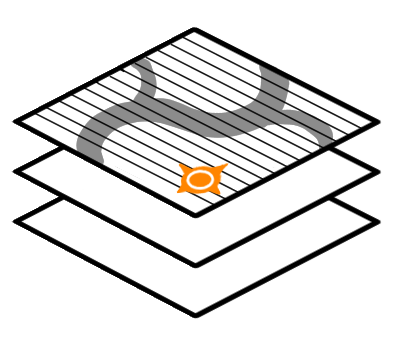

GeoFirefly turns U.S. public geospatial data into decision-ready maps, analytics, and software tools for complex operational, environmental, and commercial problems.
We help teams move from scattered public datasets to clear geospatial insight. Our work combines GIS, data engineering, spatial analysis, and focused product design to create tools that support real decisions.
Connect, process, normalize, and maintain fragmented geospatial datasets from public and third-party sources.
Apply geographic analysis, scoring, overlays, proximity analysis, and constraint screening to support complex decisions.
Deliver usable map-based products that help teams explore conditions, compare locations, and communicate findings.
Package geospatial analysis into lightweight software tools, reports, dashboards, and APIs that fit operational workflows.
GeoFirefly supports commercial, operational, environmental, and investment workflows where spatial context changes the decision.
Compare potential locations using environmental, infrastructure, demographic, transportation, and operational criteria.
Identify exposure around facilities, assets, routes, and service areas using public hazard and infrastructure datasets.
Screen parcels, regions, and project areas for flood, terrain, environmental, land-use, and regulatory constraints.
Turn parcel-adjacent public data into practical insight for acquisition, development, underwriting, and investment review.
Combine flood, elevation, storm, heat, and environmental indicators to evaluate location-based exposure.
Analyze service areas, coverage gaps, travel patterns, market regions, and operational footprints.
We identify and collect relevant public and third-party datasets for the decision, region, or workflow.
We resolve inconsistencies, standardize formats, document sources, and prepare data for analysis.
We use GIS workflows, spatial models, overlays, proximity analysis, and scoring methods to reveal meaningful patterns.
We package the results into practical tools that decision-makers, analysts, operators, or technical teams can use.
U.S. public datasets are abundant, but they are often fragmented across agencies, published in inconsistent formats, updated on different schedules, and difficult to operationalize.
GeoFirefly connects, cleans, analyzes, and packages public datasets so organizations can act faster and with more spatial context.
Every solution is built with documented data sources, repeatable processing workflows, and clear methodology notes. We distinguish raw public data from proprietary analysis, scoring, and software.
Datasets are documented with source agencies, access dates, update notes, and attribution where applicable.
Workflows are designed to be rerun, reviewed, improved, and adapted as public datasets change.
Known gaps, inconsistencies, and limitations are identified so users can interpret results responsibly.
We separate public source data from GeoFirefly’s analysis, scoring, enrichment, and software outputs.
GeoFirefly is a geospatial intelligence company focused on turning U.S. public spatial data into practical decision-support tools.
We work at the intersection of GIS, data engineering, mapping, analytics, and product development. Our goal is to help organizations use location-based data more effectively without forcing teams to manage fragmented public datasets, custom GIS workflows, or one-off analysis on their own.
GeoFirefly is built for teams that need focused, credible, and usable spatial intelligence — from early proof of concept through operational tools.
Reach out to discuss a focused proof of concept, pilot, or spatial analysis workflow
contact@geofirefly.com